$10.00
Communication That Works: AAC Classroom Toolkit
If communication in your classroom feels inconsistent, overwhelming, or stuck… you’re not alone.
You’re juggling devices, staff support, behaviors, data, and daily routines—and somewhere in all of that, communication is supposed to “fit.”
But most of the time, it doesn’t.
Students aren’t initiating.
Staff aren’t sure what to model.
You’re prompting more than you want to.
And it feels like you’re trying everything… without seeing real progress.
This isn’t a lack of effort.
It’s a lack of a system.
Communication doesn’t improve because we add more strategies.
It improves when it becomes part of what we’re already doing—consistently, predictably, and without pressure.
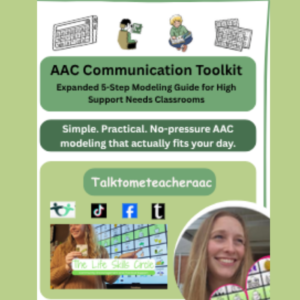
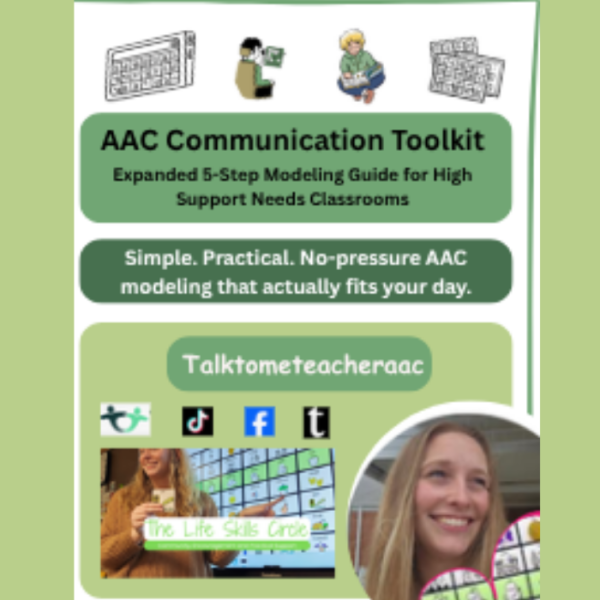
Communication That Works: AAC Classroom Toolkit is a simple, real-life system designed to help you support communication in your classroom without adding more to your plate.
No complicated frameworks.
No unrealistic expectations.
Just practical tools that work in busy, high-support classrooms.
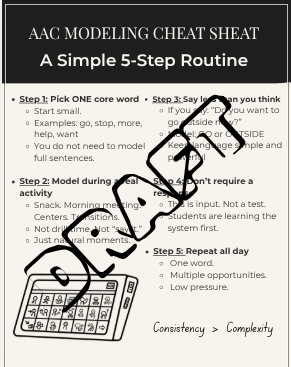
✔ Model AAC in a way that actually sticks
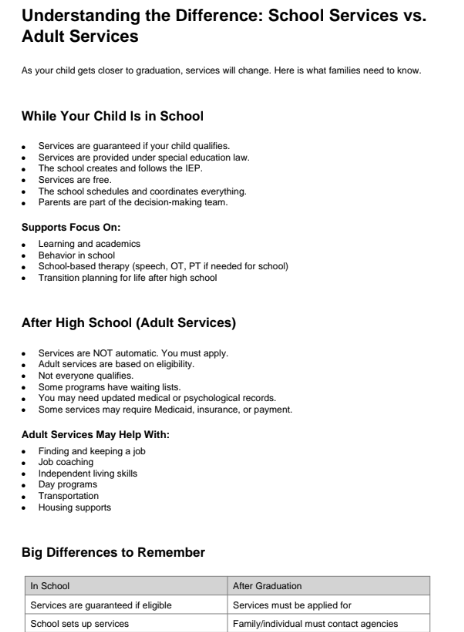
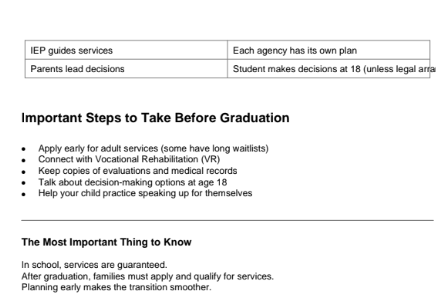
✔ Build communication into your daily routines (not on top of them)
✔ Support your paras with clear, simple expectations
✔ Reduce prompt dependence and build real student independence
✔ Track progress without overwhelming yourself
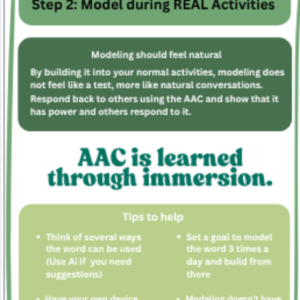
✔ Expanded AAC Modeling Guide
A clear, simple breakdown of how to model in real classroom moments
✔ Routine Communication Maps
Plug communication into snack, transitions, and morning meeting
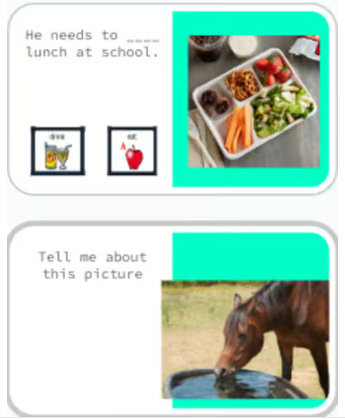
✔ Quick Reference Posters
So your whole team supports communication consistently
✔ Simple Data Sheets
Track initiation and engagement without burnout
✔ Prompt Fading Roadmap
Move students from prompted responses → independent communication
A classroom where:
You don’t need more ideas.
You need something that works.
Start here.
/5
Total reviews
|
|
Persons recommended this product
Anonymous
Shopper
check_circle Verified
Shop owner replied
Was this helpful
Anonymous
Shopper
check_circle Verified
Shop owner replied
Was this helpful
There are no reviews yet.
Be the first to review “ ”
Your feedback helps us improve our service.
Only logged in customers who have purchased this product may leave a review
,
I’m Jessica Hernandez, a Special Education teacher with 14 years of experience supporting middle and high school AAC users. My resources are made to save you time and support real communication—easy to use, visually clear, and adaptable across learners and AAC systems. Everything is classroom-tested to help your students communicate, build independence, and stay engaged.

Come for the Resources.
Stay for the Community.
2025 Copyright Tech and Mortar, LLC