Why Play-Based Assessment Changed Everything in My Pre-K Classroom
Sometimes when I brought out my assessment clipboard, a child who had been happily naming letters during play would get quiet or second-guess an answer. I’d think, “I just heard you name that letter a few minutes ago!” It made me wonder how I could check in on what my preschoolers knew while they were doing something they already enjoyed. So I turned it into a game.
The Problem with Traditional Pre-K Assessment
In early learning, we are often expected to assess students several times a year. But there is rarely a formal tool designed for preschool and pre-K that actually fits how young children learn and communicate. Most tools look and feel like tests — and even at four years old, kids can sense that.
When a child is anxious, you do not get their best. You get their most nervous. That is not useful data.
What Play-Based Assessment Looks Like Instead
The idea is simple: if the child thinks they are playing, they behave naturally. They point to the letter they know, they count the number cards without hesitation, they tell you the shape because the game asked them to — not because a teacher is waiting with a pen.
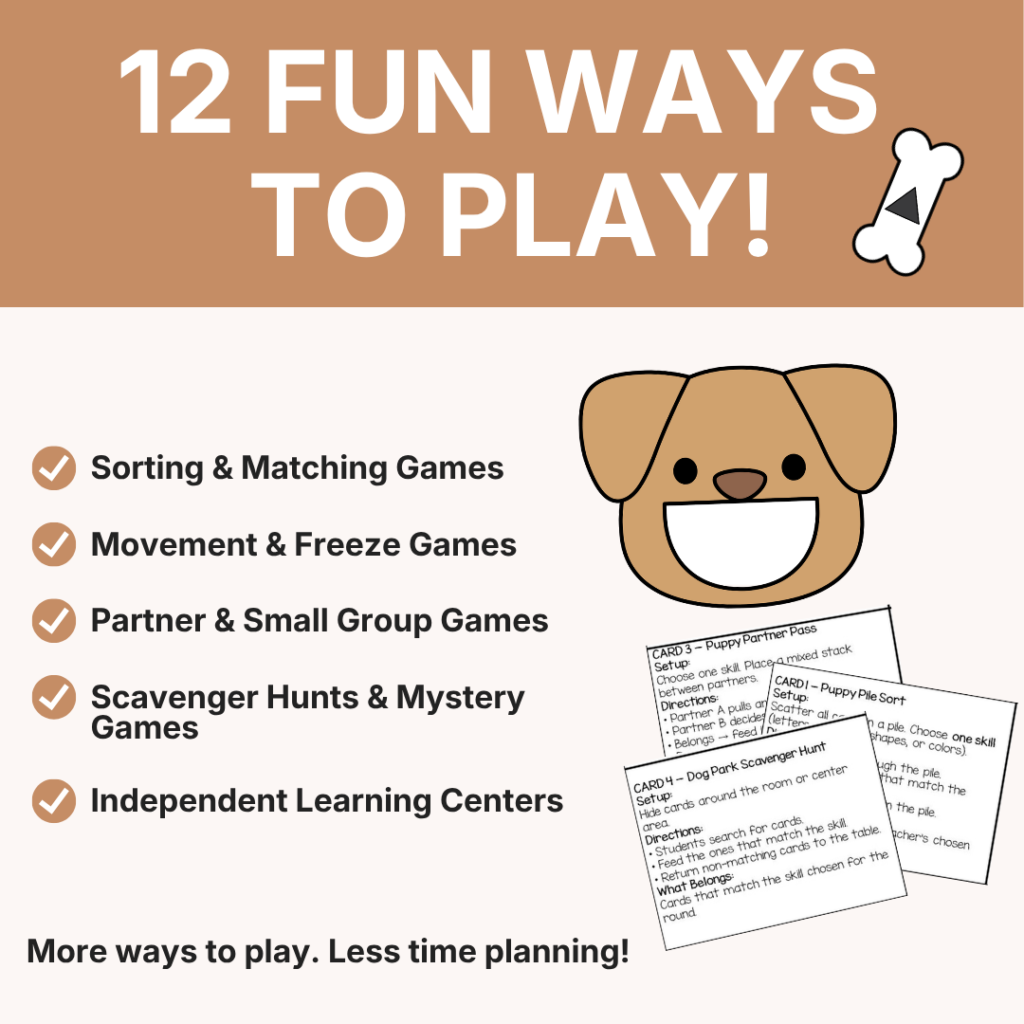
I created twelve activity games that cover the six foundational pre-K skill areas:
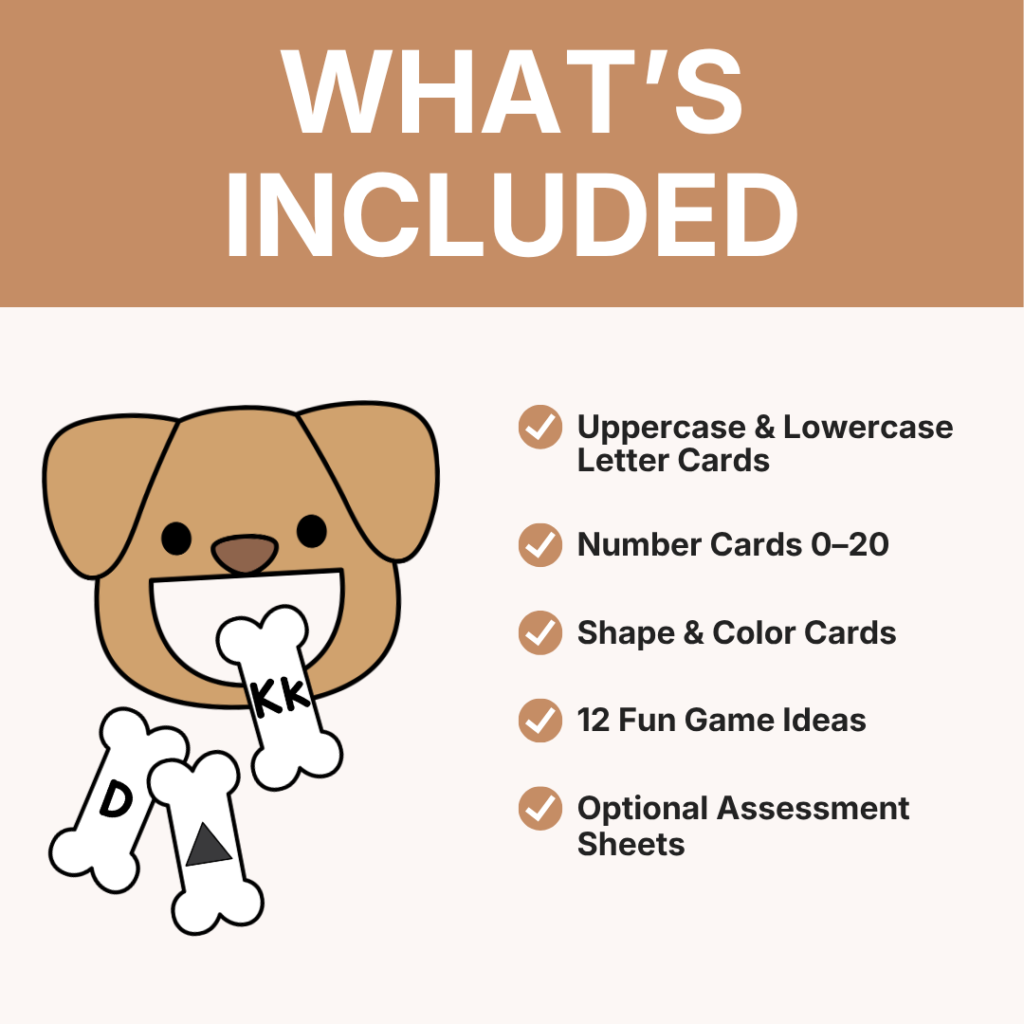
- Uppercase letter identification
- Lowercase letter identification
- Letter sounds
- Numbers 0-20
- Shapes
- Colors
While students play, I sit nearby with my observation recording sheet and quietly note what each child knows and what they still need to practice. The kids barely notice. I once told a child I was writing things down for me to remember — not anything bad — and they went right back to playing without a second thought.
You can find Play-Based Pre-K Skill Practice & Assessment Games on my shop.
The ‘Yum Yum Yum’ Moment
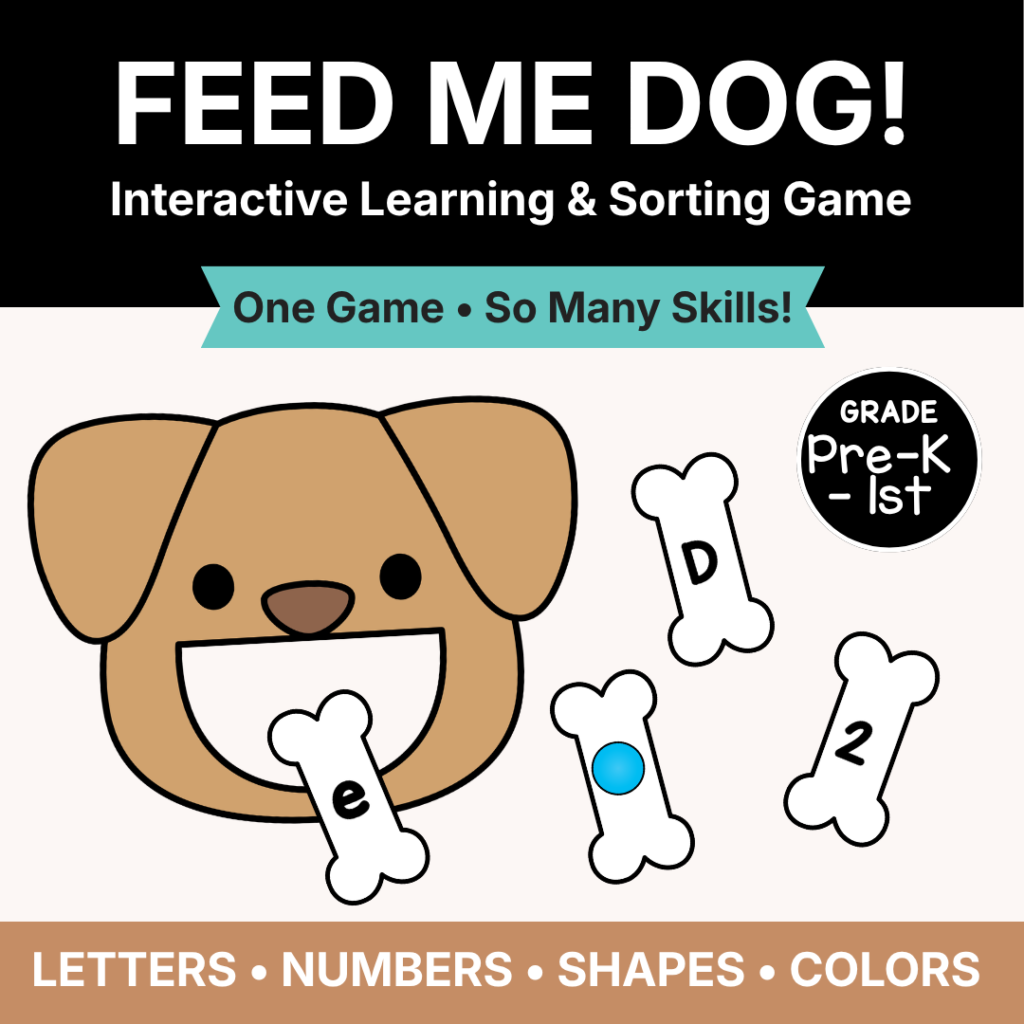
One of my favorite parts of Feed Me Dog is seeing how excited a child gets when they name what’s on their bone card correctly and get to feed it to the dog. Then they get to be the dog and make the eating sounds. “Yum yum yum yum yum yum!” They think it’s hilarious, and they’re usually ready for another turn. I get to hear what they know, and they get to feed a very hungry dog. That is the kind of engagement you simply cannot manufacture in a formal assessment setting.
That moment told me everything. When children are laughing and comfortable, they learn. And when they learn in front of you, you can assess them honestly.
Assess Any Day, Not Just at the Grading Period
One of the biggest shifts this play-based pre-K assessment brought to my classroom was flexibility. I no longer had to wait until the end of a marking period to gather data. I could check in with a small group on a Tuesday morning, note where everyone was, and adjust my planning for the rest of the week.
That kind of responsive teaching is only possible when assessment feels like a natural part of the day — not an event.
Who This Is For
If you teach preschool or pre-K and you are expected to assess students across foundational skill areas more than once a year, this was made for you. It works beautifully in small groups, one-on-one settings, and even as an independent center once kids are familiar with the games.
You can find Play-Based Pre-K Skill Practice & Assessment Games on my shop.
It is also a great tool for any adult in the room. The games are clear enough that a paraeducator, a parent volunteer, or even a substitute can run them while you observe from nearby.
Ready to Try It?
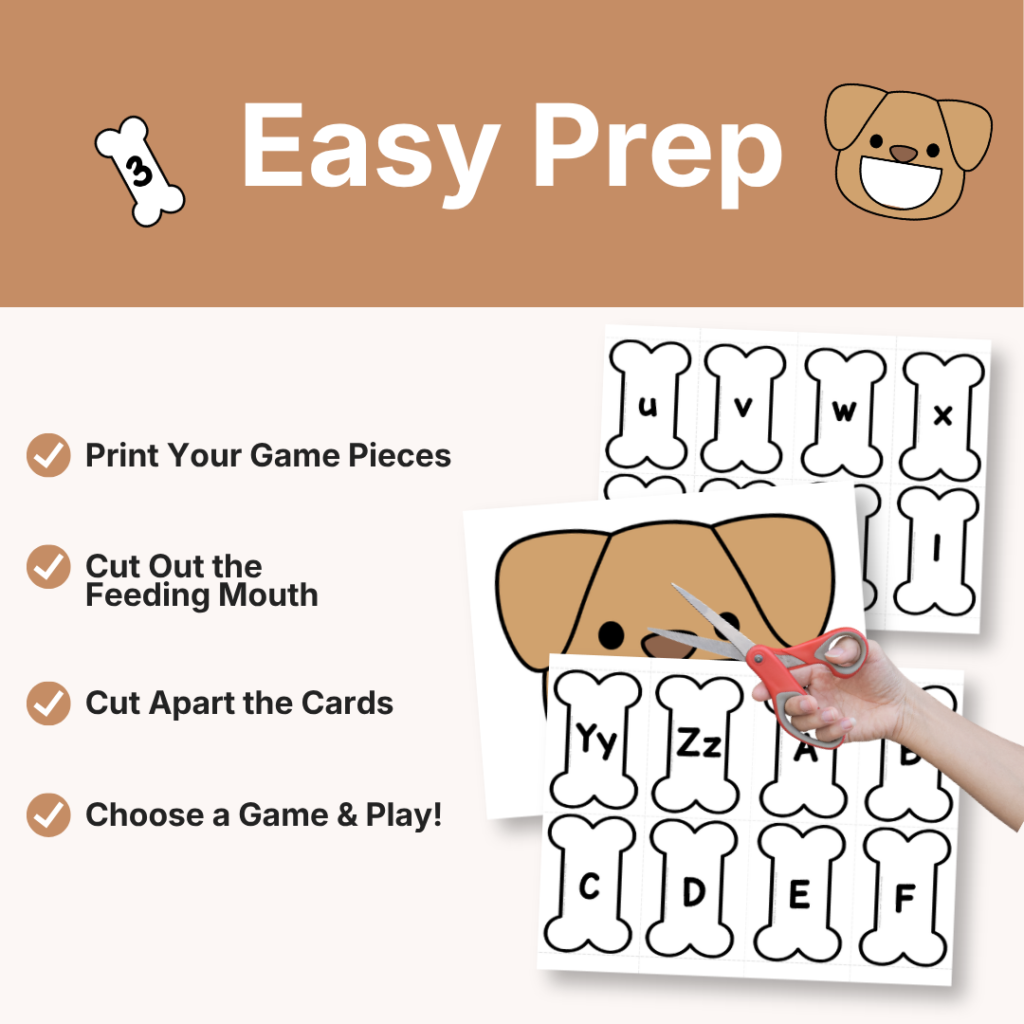
Want to see what your preschoolers know while they play? Try Feed Me Dog during your next small group or one-on-one check-in. Your preschoolers can practice letters, numbers, shapes, and colors as they feed the dog, and you can jot down what they know and what they’re still practicing.
Get ready for lots of “yum yum yum!”
https://teacherstore.io/?post_type=product&p=63434
Want to try another theme? Explore all my Feed Me Sort Games.