

Your Students Are Annotating. They’re Just Not Thinking.
Here’s what actually happens in most classrooms: a student picks up a highlighter and colors three-quarters of the page. Or they write ‘wow’ next to a sentence and move on. They’ve technically annotated. They haven’t thought about a single word.
That’s not a character flaw. It’s a training problem. Students do what they’re taught to do, and somewhere along the way they learned that annotation is a performance — something you show the teacher, not something you do for yourself.
This annotation 3-lab sequence exists to fix that.
What the Sequence Actually Does
The three labs build on each other deliberately. You can’t rush to Lab 3 without Lab 1, because Lab 1 is where students first encounter the idea that annotation is a thinking tool — not a tax on reading.
Lab 1 is a mindset anchor. Students learn what annotation is, why it exists, and what it’s supposed to do for them as readers. That foundation matters. Without it, everything else is just another worksheet.
Lab 2 is where students start making real decisions. Task cards ask them to look at short pieces of text and decide what deserves attention — and explain why. There’s a recording sheet to capture their thinking. The key word is ‘decide.’ Students are exercising judgment, not following a checklist.
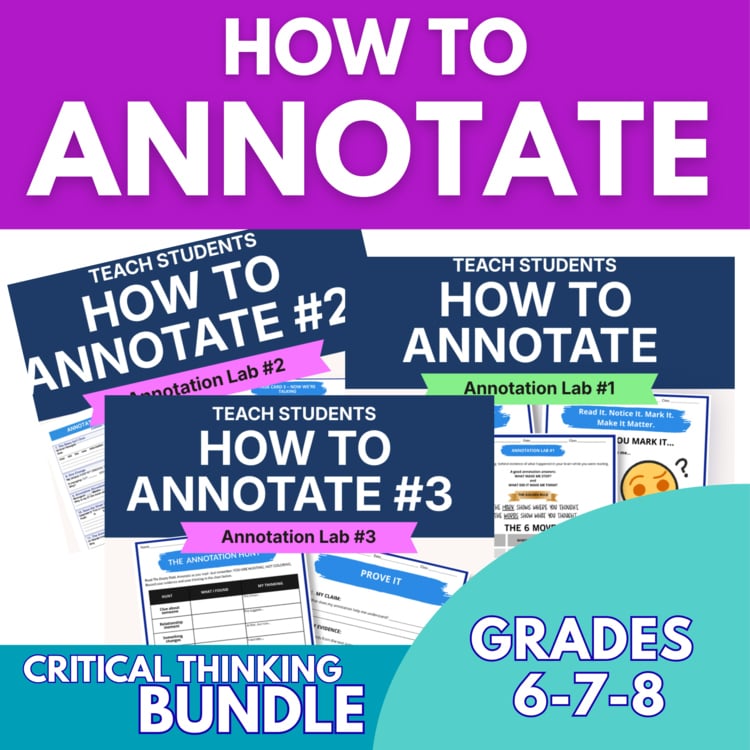
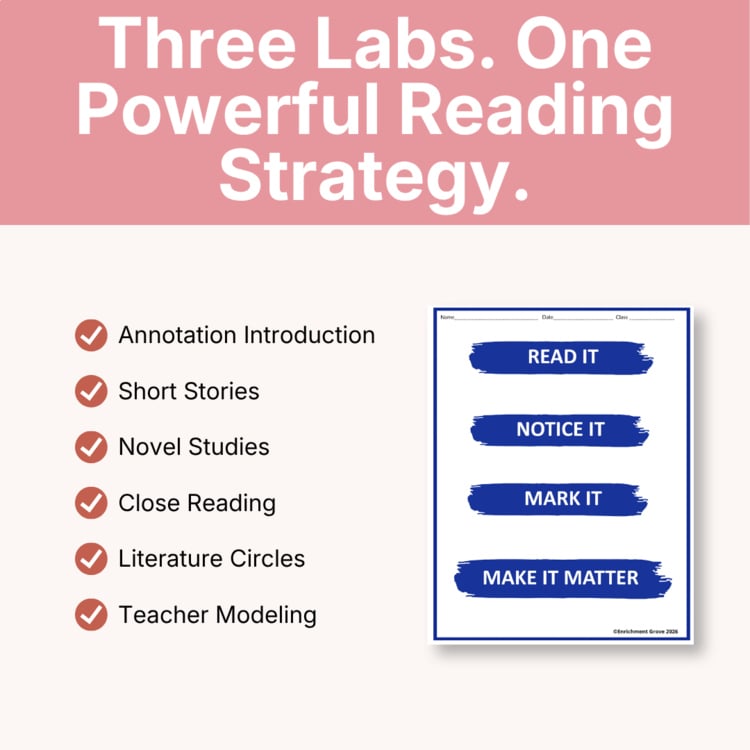
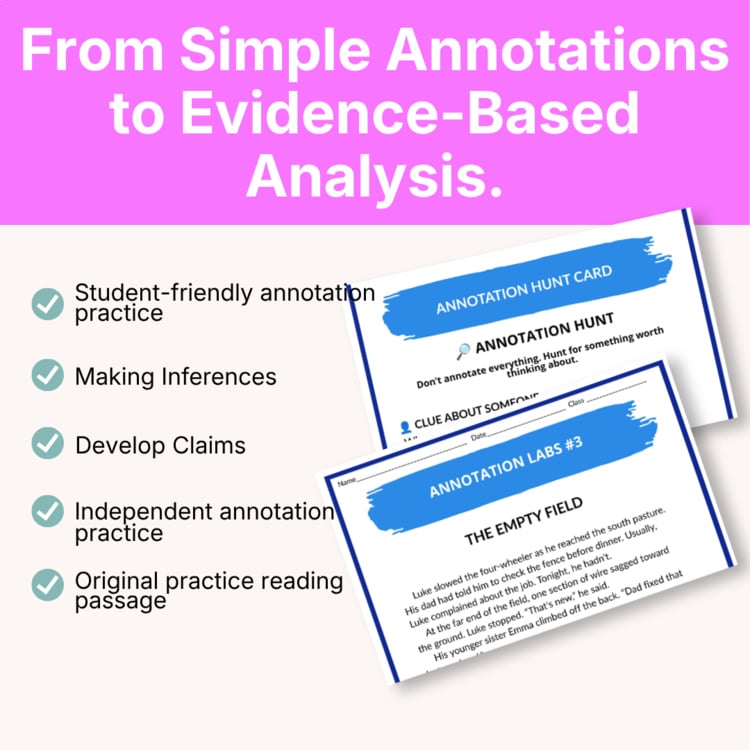
Lab 3 brings it together. Students are paired, they annotate a shared passage, and then they have to build a claim and find evidence — from their own annotations. The exit ticket at the end tells you, quickly, whether the whole arc landed.
The Moment That Told Me It Was Working
During Lab 2, a student looked up from the task cards and said ‘there’s more than one way to do this right.’ That was exactly the point. Annotation isn’t a formula with one correct answer. It’s a thinking process, and that student had just figured that out on their own.
That kind of moment doesn’t happen when students are filling in blanks. It happens when they’re genuinely making decisions.
Who This Is For
This sequence works best in Grades 6-12 for any teacher who assigns reading — ELA, obviously, but also history, science, or any content area where students need to interact with a text rather than just survive it.
It’s especially strong in October and November, when you’ve had a few weeks to build routines but students haven’t yet settled into autopilot reading habits for the year. That window is exactly when a mindset shift can stick.
Why Three Labs Instead of One Lesson
One lesson on annotation doesn’t change anything. Students nod, do the practice, and go back to highlighting everything the next time they open a book.
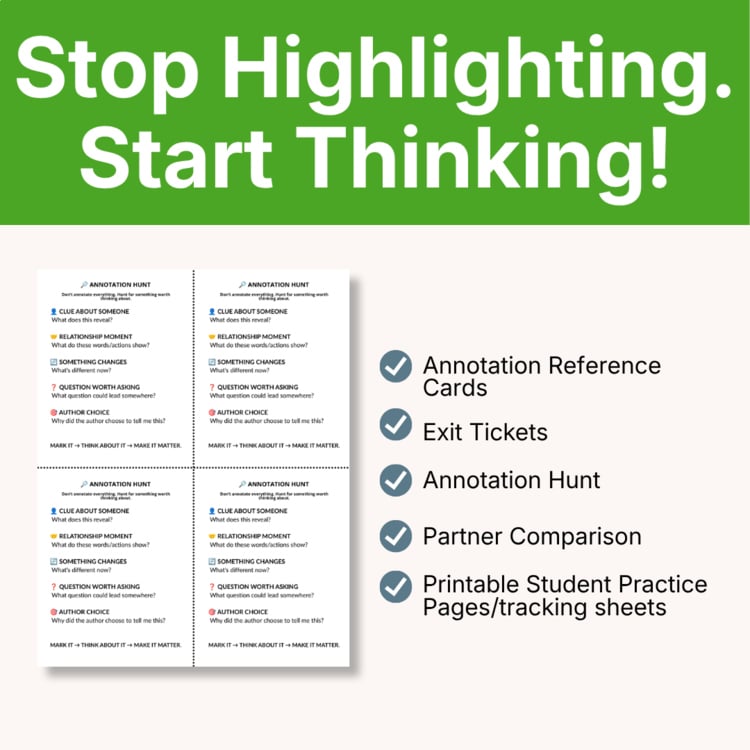
Three labs spread across a few class periods give students time to practice the mindset, practice the decision-making, and then apply both under a little more pressure — with a partner, with a real passage, and with a claim on the line.
The sequence is structured enough that it runs smoothly, and open enough that students still have to think. That balance is hard to get right, and it’s what makes the exit ticket data meaningful rather than just a completion check.
Ready to Try It?
If you want students who annotate because it helps them — not because you asked them to — this is the sequence that gets you there.
Grab the annotation 3-lab sequence here: https://teacherstore.io/product/annotation-labs-bundle-3-engaging-lessons-for-purposeful-close-reading/