
The Turn-In Basket Was Winning. Here Is What Finally Fixed It.
If you have ever stood in front of a shared turn-in basket wondering how 24 students generated what looks like 400 papers — all mixed together, none of them labeled by assignment — you are not alone. The basket is one of those classroom systems that seems like it should work in theory and absolutely does not work in practice.
The real problem is not volume. It is organization at the source. Papers go in, information comes out slowly and painfully, and by the time you sit down to grade, you are already doing triage.
The class turn-in tracker was born from that exact frustration.
One Slip Per Pile Changes Everything
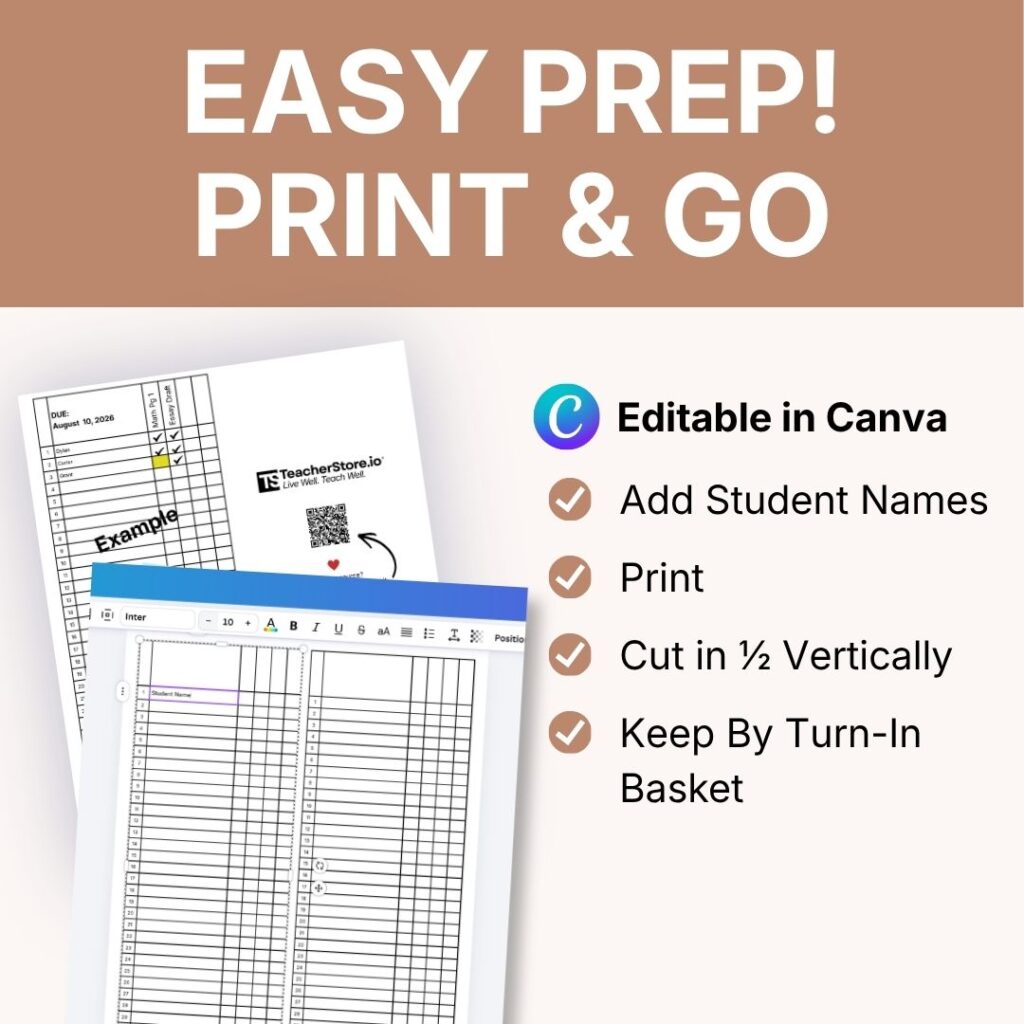
The idea is straightforward: instead of one basket for everything, each assignment travels with its own tracker slip. The slip is clipped to the pile before the first student walks up. When students turn in their work, they find their name and check it off. That is their entire job.
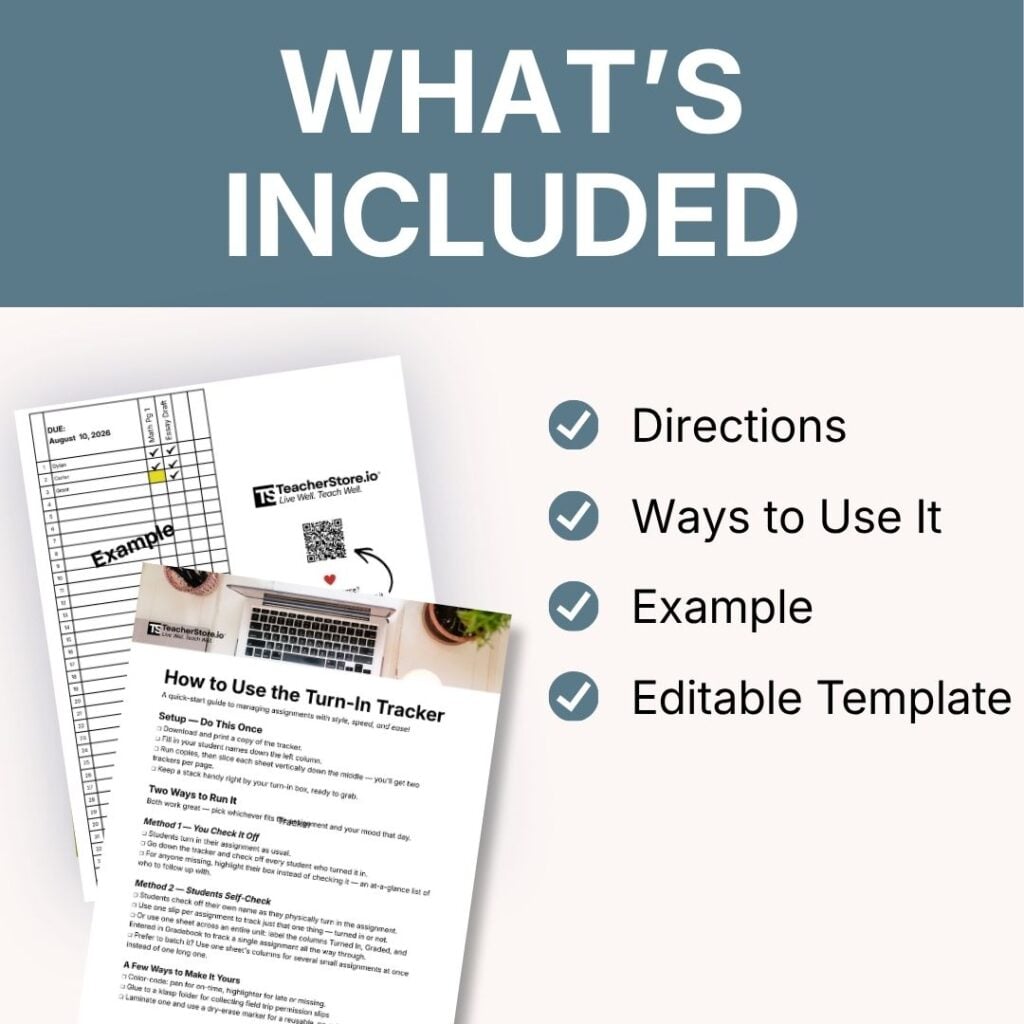
By the time you collect the stack, the papers are already sorted, the names are already marked, and you can see at a glance who has not submitted yet — without touching a single paper.
That shift from one bin to sorted piles sounds small. In practice it changes everything about how manageable the whole workflow feels.
Students Take It More Seriously Than You Expect
Here is the part that might surprise you: second graders ran this system with minimal errors, and they were genuinely proud of it. There is something about walking up and checking off your own name that feels official to a seven-year-old. They take it seriously. They like the ownership.
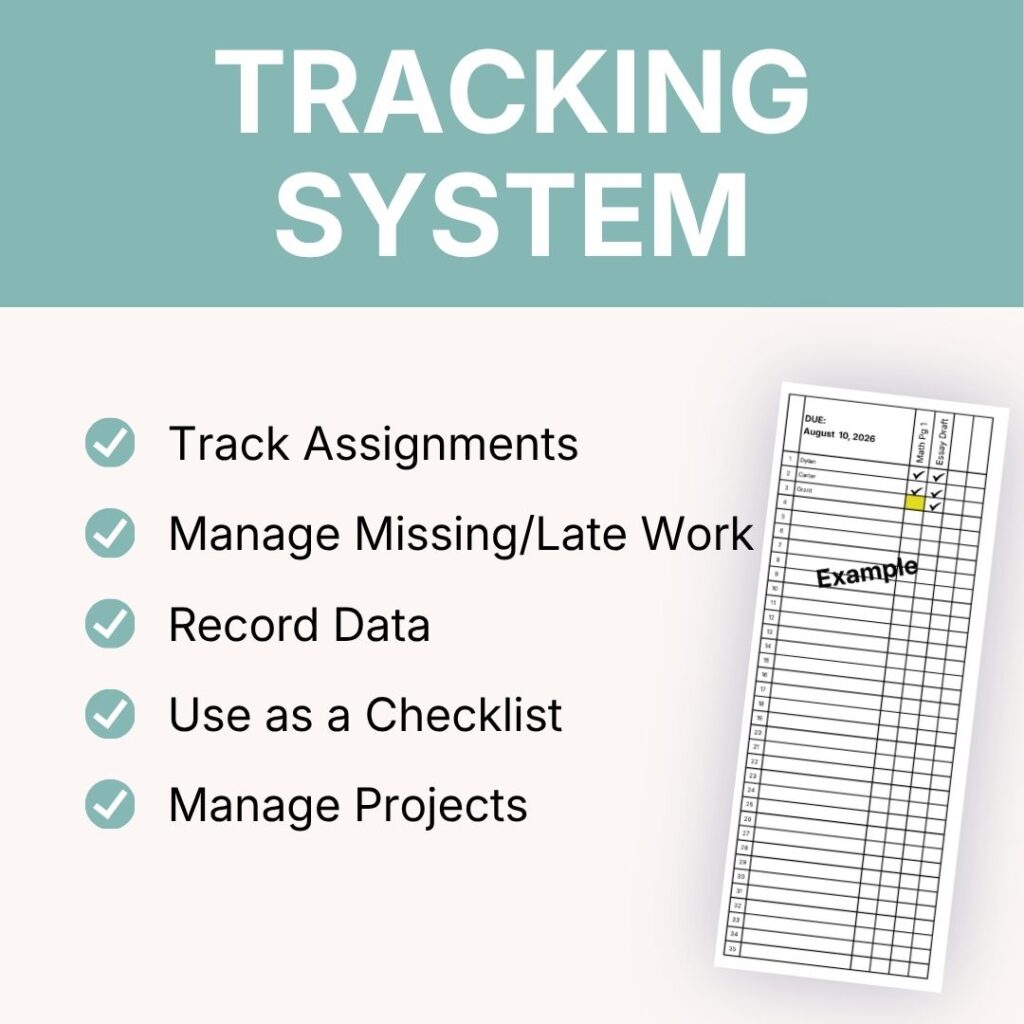
And when an error happened — checking the wrong row, for example — it was easy to catch. You were searching within one tidy stack of about 20 papers, not digging through a bin of 200. The scale of the error stays small.
Older students respond the same way. Any age that benefits from a moment of personal accountability built into the daily routine will take to this quickly.
The Slip Does More Than Sort
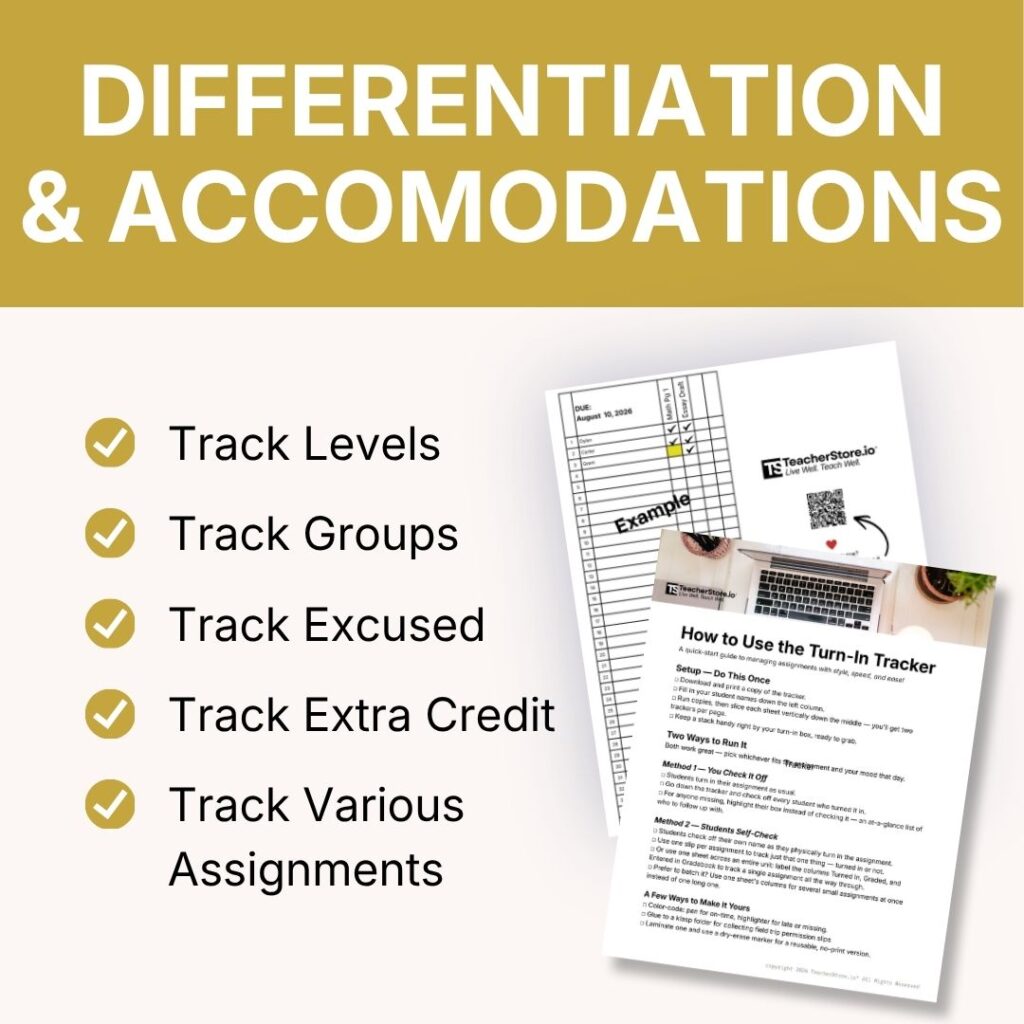
What made this tracker grow from a sorting tool into a full workflow tool was realizing the slip did not have to stop at turn-in. It travels with the papers through grading and all the way to gradebook entry. No rewriting names. No cross-referencing a separate list. Everything you need is already on the slip in your hand.
One teacher started taping the tracker to the field trip folder so the permission slips and the sign-off sheet traveled together through the entire day of the trip. When a parent called while they were loading the bus, the answer was right there.
How to Set It Up in Your Classroom
Print one slip per assignment. Clip it to the designated pile. Teach the check-off step once — model it, do it together as a class one time — and then let students own it. Most classes have the routine running independently within the first week.
It works for daily assignments, weekly packets, permission slips, reading logs, and assessments. It is flexible enough for any grade level and any classroom structure, and it is designed to print without color ink so it does not eat your budget.
A System That Runs Itself
The best classroom management tools are the ones students take over. When the check-off step belongs to them, they arrive at the turn-in station with purpose. They look for their name. They make sure it gets marked. And you collect a sorted, labeled stack that is already halfway to your gradebook.
If your turn-in basket is currently winning, this class turn-in tracker is worth a try. Find it at https://teacherstore.io/product/assignment-tracking-slip-system-for-teachers/ and start sorted stacks as soon as tomorrow.