You May Also Like
Suggested Resources by ClaimLore
Subject · ELA
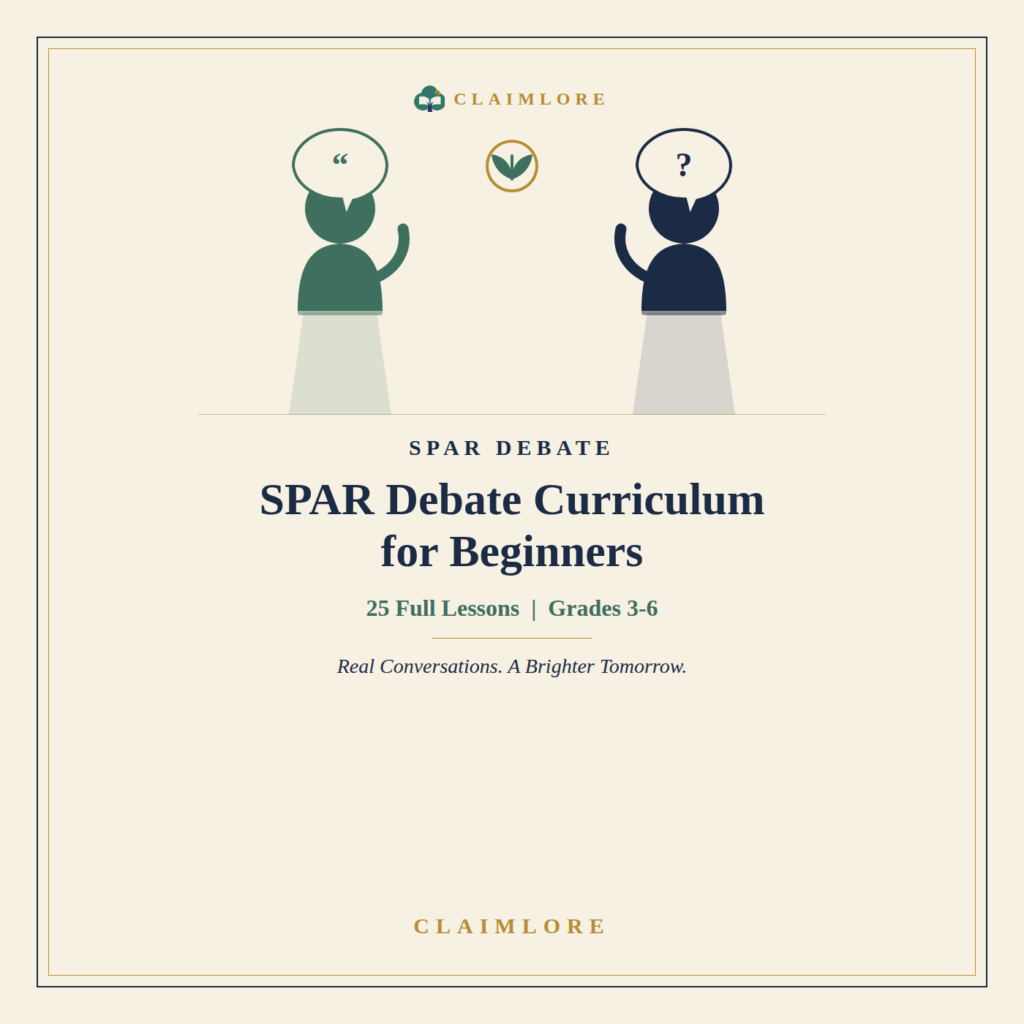
SPAR Debate Curriculum for Beginners | 25 Lessons | ClaimLore
by
 ClaimLore
$19.99
A complete beginner curriculum for SPAR (spontaneous argumentation) debate, designed for students in grades 3-6 who have no prior debate experience. SPAR uses short, fast-paced rounds with a 2-minute prep period, quick constructive speeches, cross-examination and rebuttal, so it fits a typical 45-minute class period.
What is included
- 25 lesson slide decks in Google Slides format (editable copies), each with about 22-25 slides including warm-ups, retrieval checks, guided instruction (I do / We do) and practice rounds
- Teacher Companion Notes: one page of facilitation guidance per lesson covering teaching focus, common pitfalls, classroom strategies and differentiated scaffolding
How the course builds
Students begin with the four-part AREL argument framework (Assertion, Reasoning, Evidence, Link), then move through preparation and delivery, cross-examination questioning, attacking and defending arguments, and impact weighing. The later lessons simulate tournament conditions with unfamiliar motions, rapid brainstorming, quick rebuttal drills, judging practice and a final championship round.
Who it is for
Debate clubs, ELA enrichment classes, critical thinking courses and homeschool groups with students in grades 3-6. No specialised background knowledge is required.
Format
No format listed
Questions
Questions about this resource
Wondering if this is the right fit before you buy? See what other shoppers asked, or ask Jerin your own. You don’t need to have bought anything.
Sign in to ask a question
Sign in so Jerin’s answer can reach you. You don’t need to have bought anything from ClaimLore.
What Teachers Are Saying
No reviews yet — be the first to leave one.
Stay in the Loop
Join the ClaimLore Email List
ClaimLore
Hi, I'm Jerin Parker. I'm a debate and public speaking coach with almost ten years of teaching experience. Through competition, I earned the National Forensic League Quadruple Ruby, and I competed in debate and public speaking through high school and university in the TFA, UIL and NFL systems. I now coach World Scholar's Cup and SPAR debate. My ClaimLore resources use the Steelman Method: students argue the other side's case before making their own, so they learn to reason, listen, and speak with confidence.
Join the ClaimLore Email List
Live Well · Teach Well
Shop TeacherStore Goods