

The Exit Ticket Problem Nobody Talks About
Most exit tickets do not ask students to think. They ask students to confirm.
One question, one answer, done. The student writes something — sometimes one word, sometimes a full sentence — and you collect it knowing only that they were present and compliant. That is not the same as knowing they understood something, or that the understanding will last past the bell.
After 39 years I am not saying this to criticize the practice. Exit tickets are useful. The problem is usually the prompts.
What 'Get It Done' Looks Like
You know the moment. You ask the exit question and half the class finishes in forty-five seconds. They were not fast because they thought deeply. They were fast because the prompt allowed a one-word answer, and they found it.
That is a prompt design problem, not a student motivation problem. When the question can be answered without making a choice or forming a judgment, students will take the shortest path every time. That is not laziness. That is efficiency.
What Changes When the Prompt Requires More
Depth-of-knowledge levels give you a framework for designing prompts that cannot be answered on autopilot.
Level one is recall — name it, list it, identify it. Useful for checking basic retention, but it tells you nothing about whether a student can do anything with what they know.
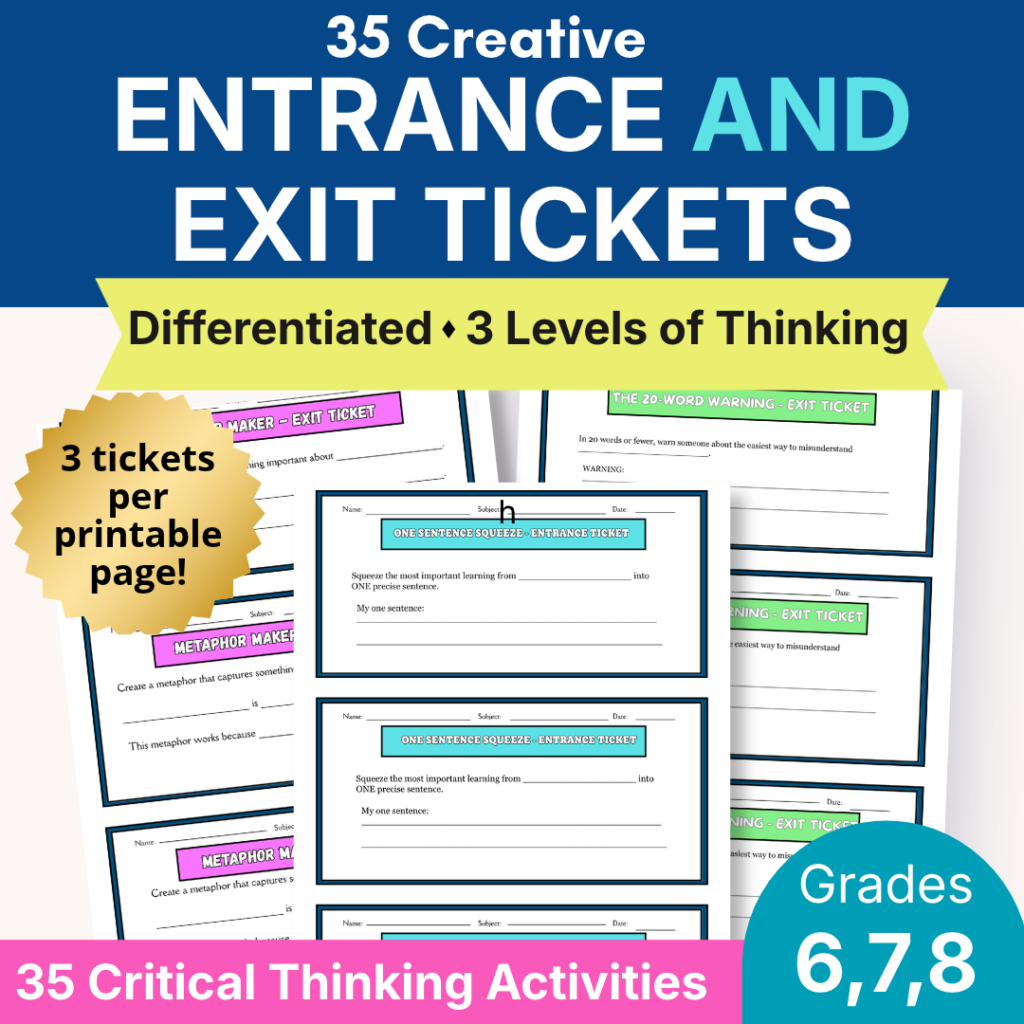
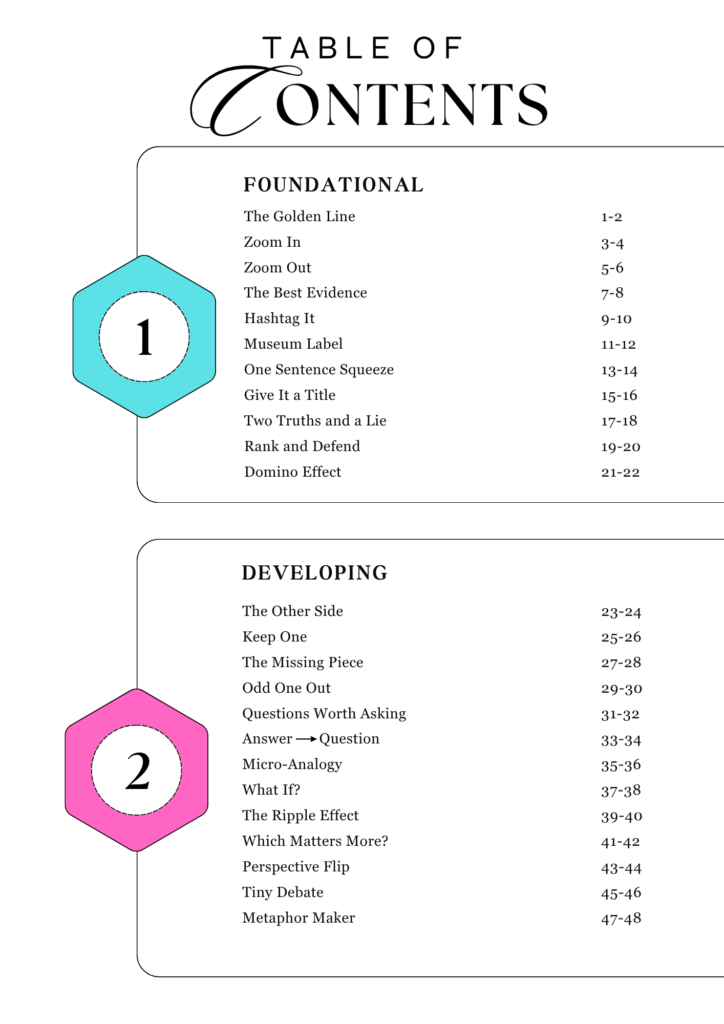
Level two asks students to process — compare, explain, connect. The answer requires more than memory. It requires a little construction.
Level three is where thinking actually happens. Students form judgments. They apply information to something new. They write a haiku about the concept, or capture it in exactly six words, or write a definition from scratch without looking at their notes.
That last category sounds small. It is not. When students have to write a haiku about photosynthesis or the Civil War or a math property, they have to decide what matters most about it. That decision is the thinking.
The Competition Nobody Expected
Here is what surprised me when I started using these prompts. Students who had been giving one-word answers for months started getting competitive — not in a stressful way, but in the way that happens when something feels like a game worth winning.
They wanted their six-word sentence to be better than their neighbor's. They would revise their haiku without being asked. The prompt had turned into something they cared about, not because I made them care, but because the format created a natural standard. You could look at two haikus and know immediately which one showed more thought.
That kind of self-evaluation is hard to manufacture. It happened because the task required a real choice.
How to Use Them
These prompts work as entrance tickets, exit tickets, or warm-ups. They are not subject-specific, so you can use the same set across multiple classes or departments.
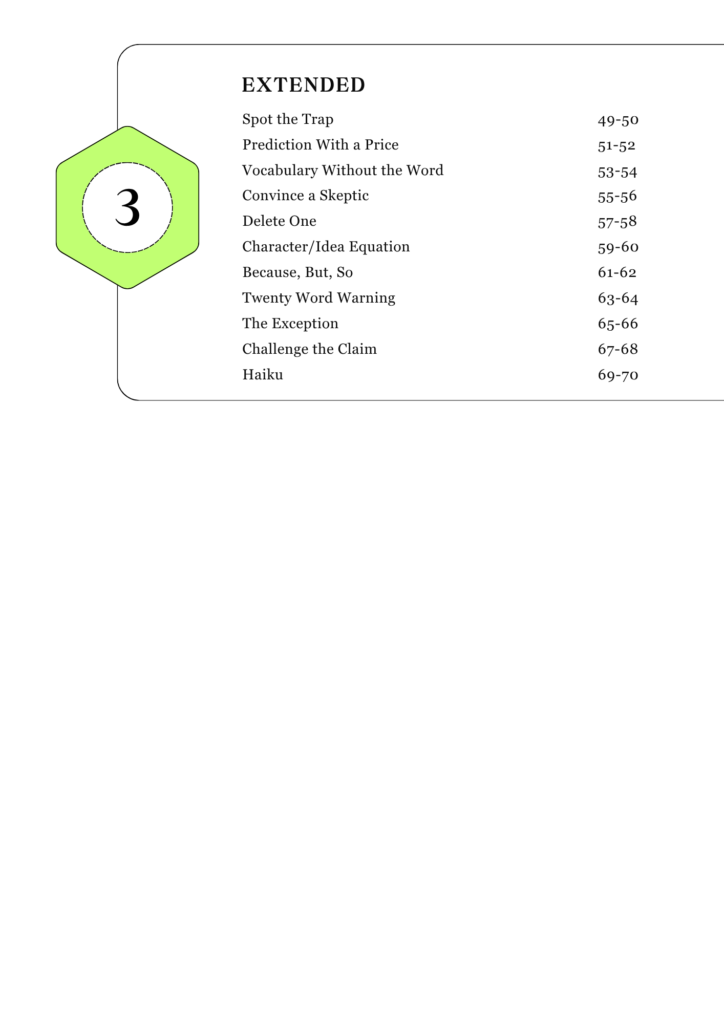
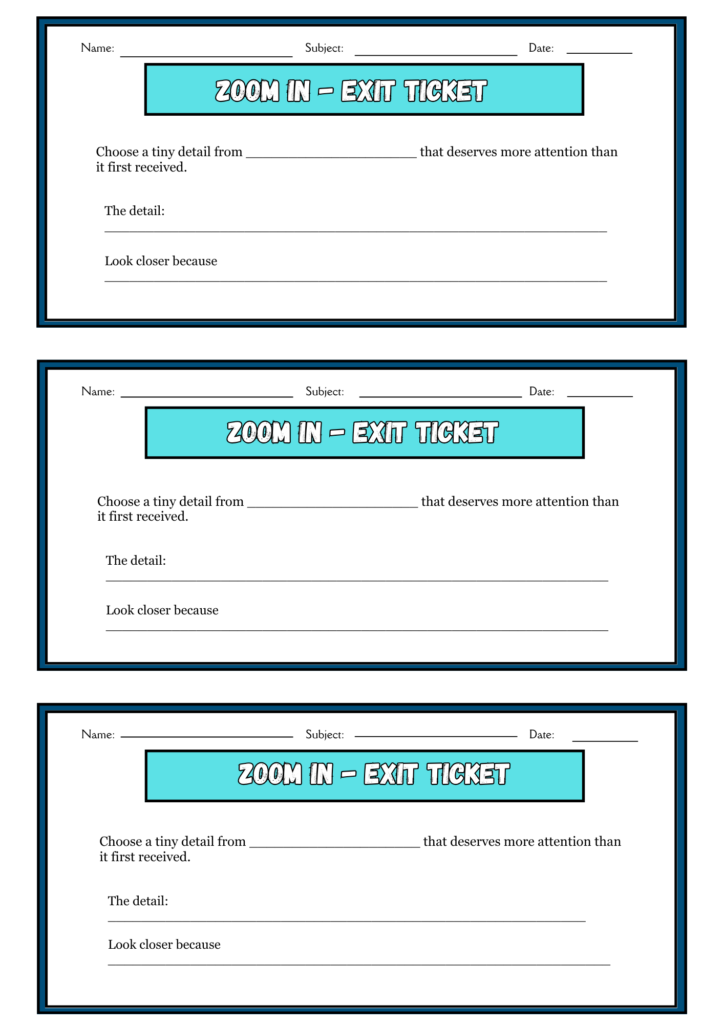
The three levels let you differentiate without making it obvious. Put a Level 1 and a Level 3 on the same slide and let students choose. Or assign the level by table. Or use Level 1 at the start of a unit and Level 3 at the end.
The point is not to make exit tickets harder. The point is to make them ask something real.
A Note on Starting Out
Students will be confused the first few times. They will look at a prompt asking them to write a six-word sentence and ask if they can just answer the question instead. That confusion is part of it. They are recalibrating what an acceptable answer looks like in your class.
Give it a few days. The students who used to finish in forty-five seconds will start taking longer — not because you pushed them, but because they want their answer to be worth reading.
If you want to try the full set of entrance and exit ticket prompts across three depth-of-knowledge levels, you can find them here: https://teacherstore.io/product/creative-exit-and-enter-tickets-critical-thinking/
They are print-ready and work in any subject, Grades 4-12. No prep beyond choosing your level for the day.