
Learning English | Business English | English Business Conversation


I work with adult students of English with at least an intermediate level of proficiency who want to transform their proficiency into fluency so that they can speak English like a professional who belongs in every room.

One phrase that English learners the world over hear constantly (and dread) is that they need to “think in English” rather than translating what they want to say from their native language into English before they speak. I gave this advice one day, as I had on so many other days in the classroom when I was still teaching children. To my surprise, one of my students threw his hands up in frustration and said,

“Miss Rossiter, what does that even MEAN? How can I think in English when I don’t know what I’m doing?”

That’s a valid question. As a teacher, being confronted with it made me realize that I had to think about it for a minute before responding. I had to quell my instinct to repeat the trite responses I always received as a student of other languages – my favorite one coming from my high school Latin teacher,

“If you translate, you’re gonna get hurt,”

he would tell us as a reminder not to form our thoughts in English then translate them into Latin before speaking.

So, rather than simply repeat a simpler version of my Latin teacher’s advice, I explained that how we learn to communicate, how we learn to understand and interpret the messages coming into our brains is determined by so many cultural factors that, as someone who is learning someone else’s language, we need to learn about those other factors and how they affect the message we’re sending. I continued by having my students think about the following things:

  1. Think about how you talk and behave when you are with your family in your house. What are the types of words you use with each member of your family? What are some basic behavior rules that exist in your family and your culture? What happens when you don’t follow those rules?
  2. Think about these same things in relation to other areas of your life within your culture, for instance, when you are in the classroom, or at church, or at a special event. What do you notice that is the same about how you communicate in these situations? What do you notice that is different? How do these similarities and differences affect your ability to communicate clearly what you want to say or how you feel? How do these similarities and differences affect the way others respond to you and your message?
  3. Now, think about these same things from the viewpoint of an English-speaking person. What do you know about the way English-speaking people think and behave? Is your understanding based on personal experience or from someone else’s experience (and is it accurate or simply an assumption)? With what you know, how do you think an English-speaking person would interpret what [student’ name] said to me earlier in class?
    And so on through a further series of questions about what the students would need to know about English-based cultures in order to convey this student’s message in a way that an English-speaker would understand without confusion.

So often I see in the media and hear it from the people I encounter throughout the day about peoples’ opinions of others from different cultures. More often than not, these opinions, which are stated as absolute fact, are based on a person’s personal negative experiences, a family member’s negative experiences or long-held belief, or revolve around a local controversy which usually focuses on the cultural issue rather than the actual problem. We, as the human race, are so eager to find fault in every other subset of the human race, yet will spend inordinate amounts of time and energy trying to justify our behavior when we are doing the same thing that we denounce in others.

When we choose to do this, we are also refusing to “think in English/the other culture’s viewpoint”.
Ultimately, when we are thinking in any language, truly thinking, it means that we are looking at the world through the eyes, heart, and mind of the people from that other culture and that we are actively trying to understand what they think, how they feel, WHY they think and feel this way, and what effect this has on them – on their interpretation of the messages coming into them; on their ability to see the situation clearly and from a practical, unbiased viewpoint. When we think in a language, we need to be viewing the world actively from that wider, cultural perspective as well as from the perspective of the individual with whom we are communicating – always remembering that communication happens with the combination of what we say, what we don’t say, and with everything we do or do not do.

As we move into the rest of our week, I challenge you to ask yourself the same questions I asked my young learners and to put your honest answers in writing. Then, if you are serious about transforming your ability to think in English (and therefor, your students’ ability to do so), take a look at the areas in which you need to improve.

If you’re brave enough, please post your findings in the comments (or in the teacher community). Let’s get this conversation started.

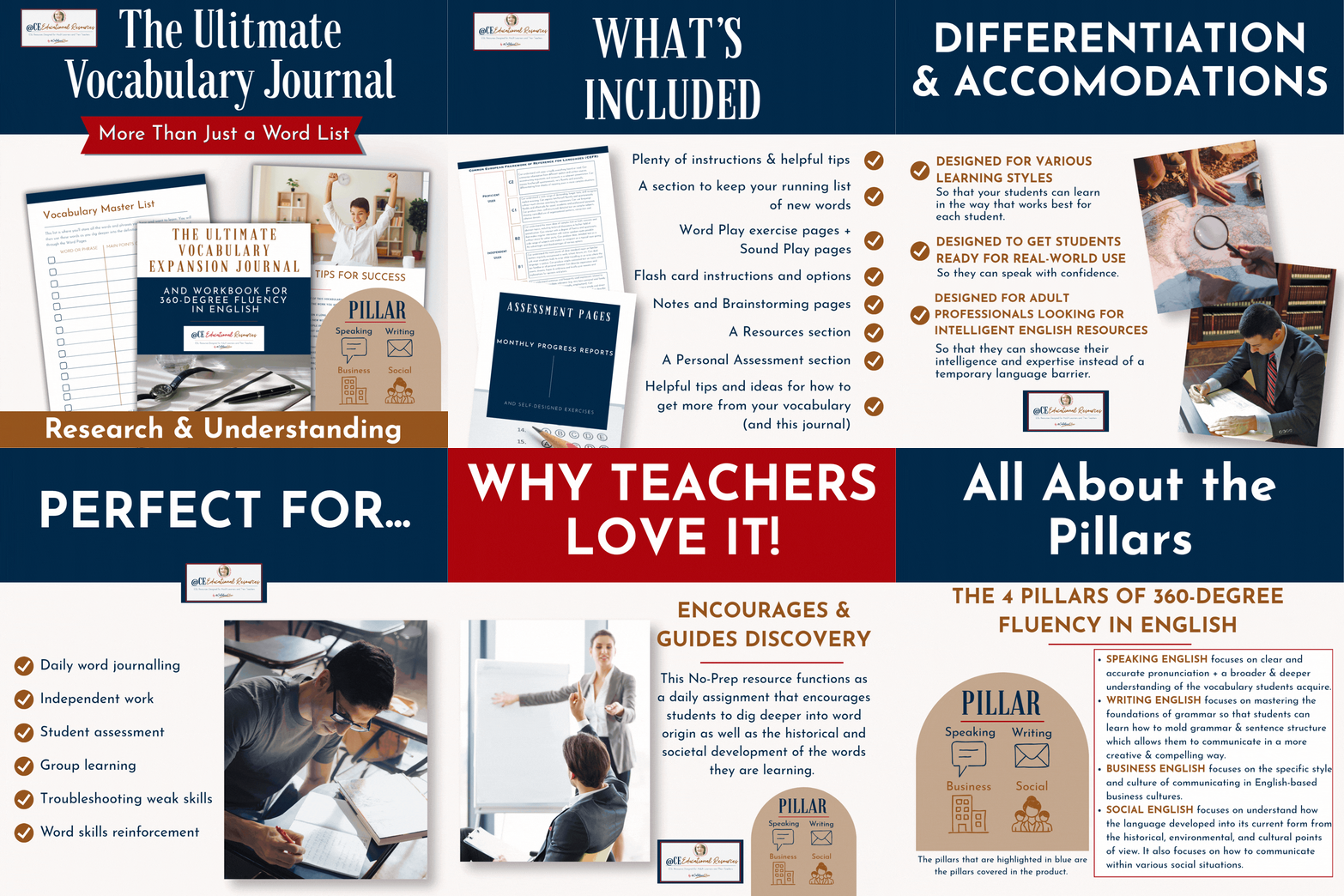
For those of you who are looking for a way to work on this in class, here’s a resource that I created just for this purpose. Click this link to find it in the TeacherStore. 


______________________________________

If you want to participate in live discussions about this and other relevant topics with other teachers of adults learning English, become a member of my FREE teacher’s community today. Click here to JOIN. 

Don’t forget to add your name to my e-mail list so that you don’t miss out on all the news, updates, and special offerings reserved only for my e-mail list subscribers. Click here to JOIN.


Was this post helpful?
A TeacherStore® Newsletter
Enjoy posts like this?
Subscribe to the Ace Educational Resources blog.
Join My Teacher Community
30-Day Challenge Club for Better Fluency in English
A community of ESL teachers of adults looking to help their students develop life-long habits of fluency through monthly challenges.
Welcome video

The one thing my students repeatedly mention to me is that they are afraid to speak English outside of the classroom because they do not understand how to approach English-speakers in different situations. That's why I created this monthly challenge club - so that students would have a way to step out into the world of English-speakers with a guiding hand to help them along the way.

🗹 Each month a new 30-Day challenge is released (including all the resources needed to complete the challenges). 🗹 These challenges are designed to present students with a real-life speaking exercise that they complete through daily tasks that teach them how to research, plan, and prepare for a specific type of English-speaking interaction, then to follow through and complete the challenge. 🗹 As teachers, we meet once a month prior to the challenge release to go over the challenge, its purpose and goals, and suggesed teaching strategies. 🗹 Additionally, we meet at the end of the challenge to talk about how it went - if any struggles occured, what successes your students had, how you felt about teaching it, and to answer any questions you have. 🗹 Each member has the opportunity to be entered into a monthly prize drawing for a $10 off coupon on your next purchase from @CE Educational Resources. 🗹 For those who choose the annual payment option, I'll hold weekly office hours to give you that bit of extra help and guidance throughout the month.

Join Today for $30
Or join for a year: $360
01
Join Today.
Get instant access to the community when you join today.
02
Find Your People.
Experience the difference of being in the right room, with the right mentorship, resources, and support of like-minded teachers.
03
Live Well, Teach Well.
Show up less stressed, more prepared, confident, and ready to be the teacher you’re meant to be.
Say
Goodbye to...
  • ✕that nagging feeling that somewhere there's a better way to motivate your students.
  • ✕being stuck in the old, robotic way of teaching English to non-native-English students.
  • ✕childish resources that do not respect your adult students' intelligence and experience.
  • ✕the insecurity, uneasiness, & dread that cobbling lessons together brings to your workday.
Say
Hello to...
  • ✓a consistent method of fully involving your students in their English fluency success.
  • ✓a vibrant method of teaching English that connects students with their everyday life.
  • ✓high-quality, intelligent resources designed for adult ESL students & the lives they live
  • ✓that sense of joy you forgot you had because you know you have a solid plan & support.
Everything You Need to Know
Frequently Asked Questions

This community is for English as a Second Language teachers of adults who want to help their students take what they learn in class and use it effectively in whatever English-based culture they find themselves. This community is for you if you are not satisfied with simply churning out students who are proficient in English. You want to give your students the tools they need to transform their proficiency in the English language into fluency in the language of English-speaking cultures.

>>> Each month, you get a new 30-day challenge and all the resources needed to complete the challenge (including instructions and teaching suggestions).
>>> You also get 2 live coaching calls - one before the challenge begins (to make sure you are familiar with the teaching point, goals, teaching approaches, and to get your questions answered), and one after the challenge ends (to share your successes, struggles, suggestions, and to answer your questions).
>>> A chance each month to win a $10 coupon that you can use at @CE Educational Resources
>>> Annual subscribers get access to weekly office hours with me to help keep you on track, answer your questions, and support you through the challenge.

Yes. The twice-monthly calls and the weekly office hours (for annual subscribers) are all held on Zoom. There may be times when we meet via Google Meet but you will be notified beforehand.

The community is a private site only for subscribers of the 30-Day Challenge Club. You will be given all the access information after you subscribe.

Your adult ESL students count on you to prepare them to be able to communicate effectively in English on the job and in the wider English-speaking worlds in which they find themselves. As ESL teachers, we don't always know everything and we often get stuck in knowing how to teach certain aspects of English or if we're on the right track in our teaching method. As teachers, in general, we don't always have the time to develop lessons or activities for our students (and finding intelligent resources that respect our adult students truly is a challenge of its own).

By joining the 30-Day Challenge Club for English Fluency Success, you not only save time, reduce your stress, and gain confidence in your lessons, but you also join a family of like-minded ESL teachers of adults who are looking to connect with you for mutual support. My goal for this community is for it to be the Go-To place for ESL teachers of adults to connect, share, support, and encourage each other in this highly-satisfying field of helping others create a new life for themselves and others through the act of learning a new language.

You can cancel anytime in your TeacherStore customer account. You’ll keep your access until the end of the period you’ve paid for, and you won’t be charged after that.

Join Today for $30
Live Well · Teach Well
Don't wait. Join the 30-Day Challenge Club for English Fluency Success right now.

You are just a click away from a happier, more confident, and enthusiastic ESL teaching experience (and a class full of students who are far more than simply proficient in English).

Join Today for $30
Or join for a year: $360
Live Well · Teach Well
More From the Blog
View All Posts →
Live Well · Teach Well
Shop TeacherStore Goods
Shop All →
A Ace Educational Resources Newsletter
Join the Ace Educational Resources email list
Tell us a little about yourself and we'll send you creative teaching ideas, new posts, and resources tailored just for you.
We respect your inbox. Unsubscribe anytime.