
Why Every Kindergarten Teacher Needs a Year-at-a-Glance Planning Chart
If you have ever sat down to plan a kindergarten week and ended up with seventeen browser tabs open, a stack of printed standards pages, and no clearer idea of what to actually teach — you are not alone. I have been there. And I stayed there for longer than I would like to admit.
Kindergarten standards are genuinely complex. ELA has reading, writing, listening, and speaking — each with substandards underneath. Math covers number sense, shapes, measurement, and more. Add in science themes and social studies topics and you are suddenly managing an enormous amount of curriculum with no simple way to see it all at once.
That was the moment I decided I needed a better system.
The Problem With Going Straight to the Standards Documents
Common Core websites and state standards documents are thorough — that is the point. But when you are a kindergarten teacher trying to plan next Monday's phonics lesson, 'thorough' is not always helpful. What you need is a way to see the big picture without getting lost in the details.
I spent hours printing pages, highlighting, and trying to organize the information into something usable. Eventually I realized I was spending more time managing the standards than I was actually planning lessons. Something had to change.
What a Month-by-Month Planning Chart Actually Does
A year-at-a-glance planning chart does one thing really well: it answers the question 'what do I teach this month?' in about thirty seconds.
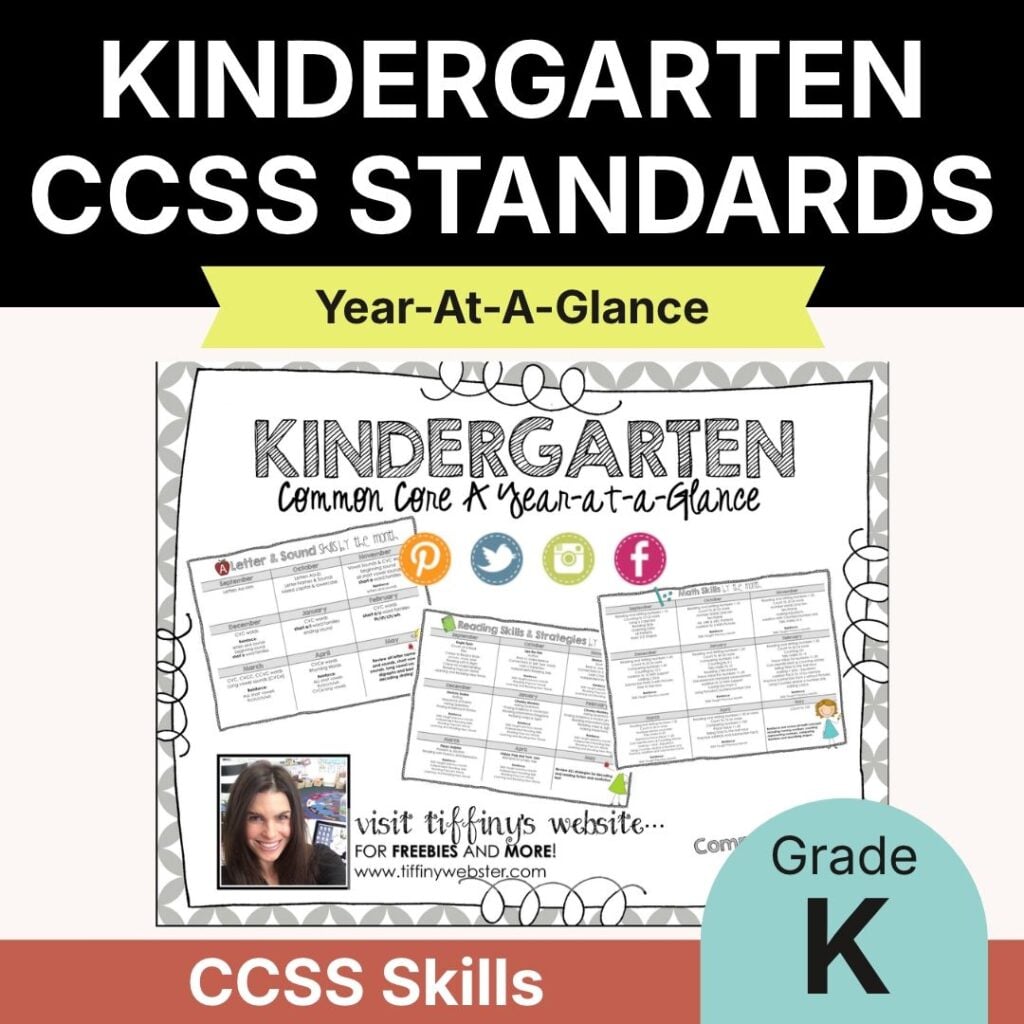
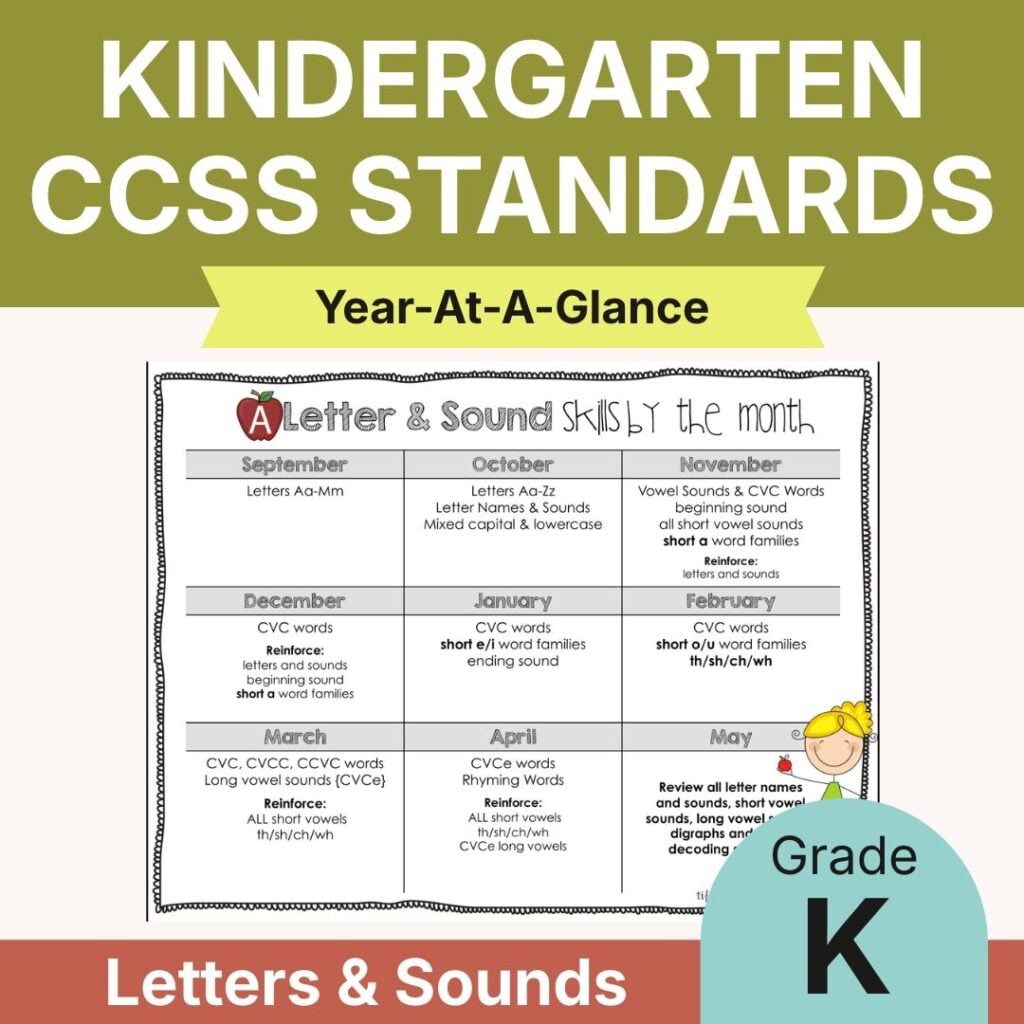
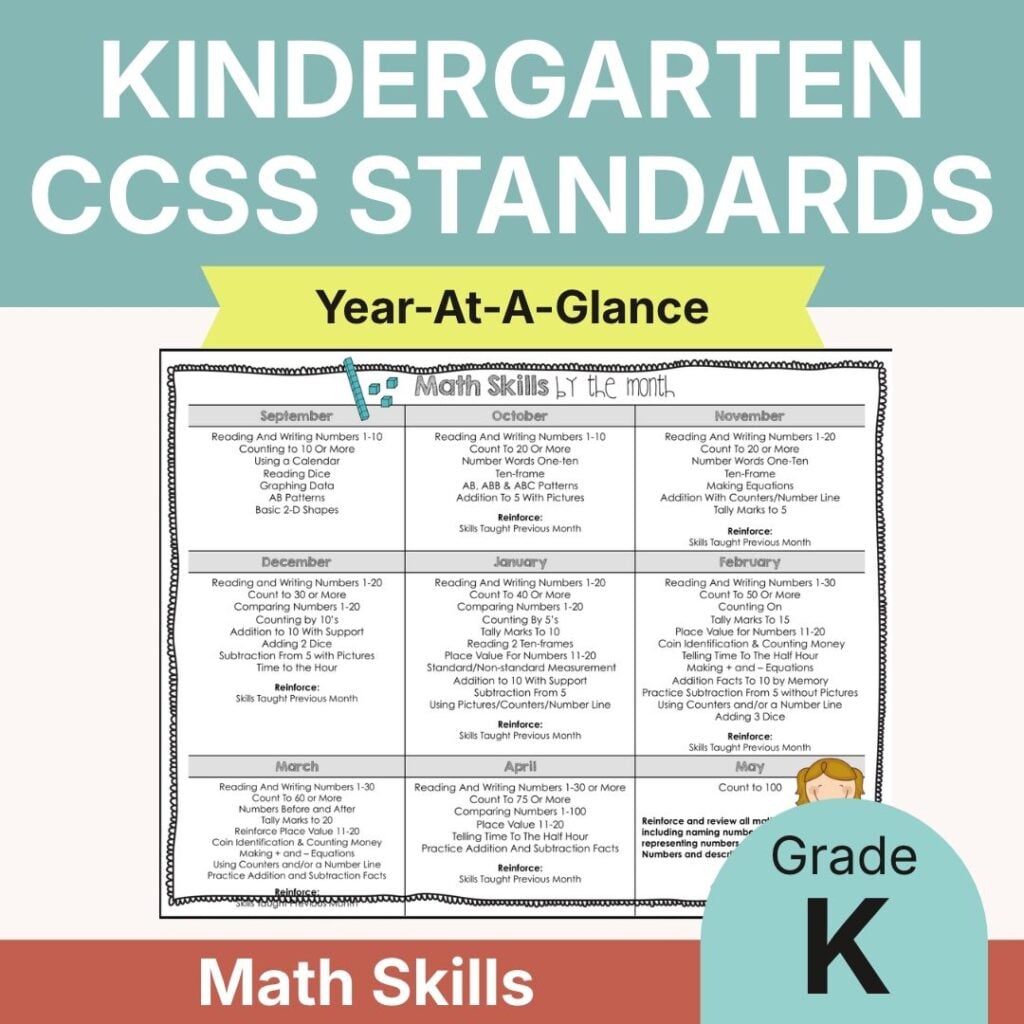
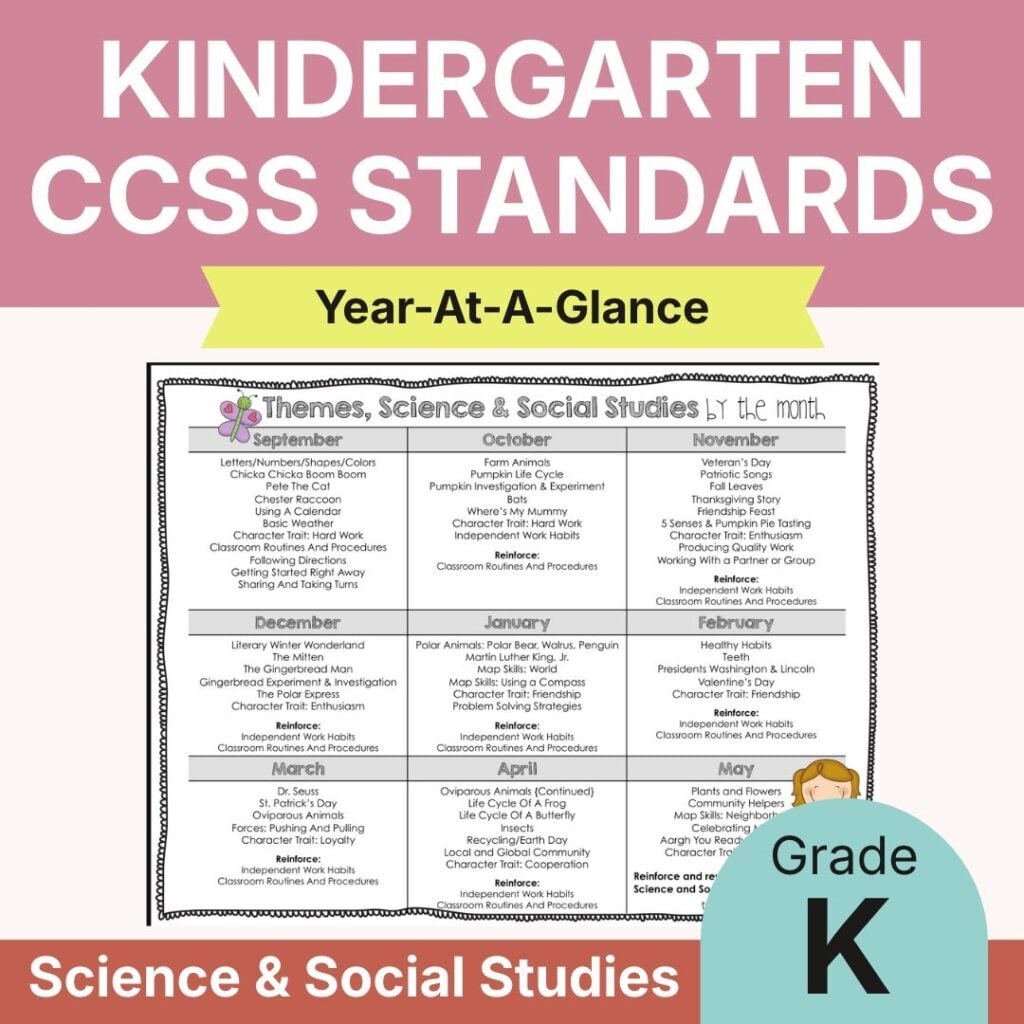
My kindergarten year-at-a-glance planning charts cover ELA (letters and sounds, sight words, reading, and writing), math concepts, and thematic science and social studies topics — all organized by month, all written in plain language. No substandard numbers. No jargon. Just the concepts, in sequence, from September through May.
The skill progression for ELA alone is worth the chart. Students move from letter recognition and letter sounds in the early months through CVC words and sight words in the middle of the year, all the way to reading at grade level and writing sentences and short paragraphs by spring. Some students even begin working on first-grade sight words by April and May — and having the chart helps you see that moment coming and plan for it.
Three Ways Teachers Actually Use This Chart
In the planning binder. I kept mine in a plastic sleeve right at the front of my binder. Every time I sat down to plan a lesson, write a newsletter, schedule a guest speaker, or coordinate an art project, I could glance at it and confirm I was on track.
At Back to School Night. I printed copies and handed them out to families. Parents loved seeing the whole year laid out simply. It opened up real conversations and helped them understand what their child was working toward each month.
For team planning. When colleagues saw my chart, they liked the format enough to create their own versions for fourth and fifth grade. A simple, plain-language curriculum map is useful at any grade level.
Why Plain Language Matters More Than You Think
There is something quietly powerful about looking at a planning document and understanding every word on it immediately. No decoding. No cross-referencing. Just clarity.
When your planning tool is easy to read, you use it more. When you use it more, your teaching is more intentional. And when your teaching is more intentional, your students feel it — in smoother transitions, in lessons that build on each other, in a classroom that has direction.
That is what a good planning chart does. It is not flashy. It does not replace your curriculum. It just makes sure you always know where you are and where you are headed.
Ready to See Your Whole Kindergarten Year at a Glance?
If you are tired of hunting through standards documents every time you sit down to plan, these kindergarten year-at-a-glance planning charts are ready to drop straight into your binder.
Grab them here: https://teacherstore.io/product/kindergarten-year-at-a-glance-planning-charts/
Set up your binder before the next unit begins — and feel that calm that comes from actually knowing what comes next.