
Why a Snack Cart Changed Everything in My Sped Classroom
I used to dread money units. Not because I did not want to teach them — I did — but because no matter how many times we practiced with fake coins and printed worksheets, the concept just would not stick. My students with moderate cognitive disabilities needed something they could touch, feel, and do in a real situation. That is what finally pushed me to build the snack cart program.
The Problem with Worksheet-Only Money Instruction
Worksheets have their place, but functional math lives in context. When a student practices handing over a dollar in a simulation, it stays a simulation. When they hand a dollar to a peer who is waiting for their chips and says 'thank you' — that is a different kind of learning entirely. The transaction is real. The social moment is real. The math has a reason.
For students who need repeated practice to reach mastery, that reason matters more than almost anything else.
What the Snack Cart Vocational Transition Program Actually Looks Like
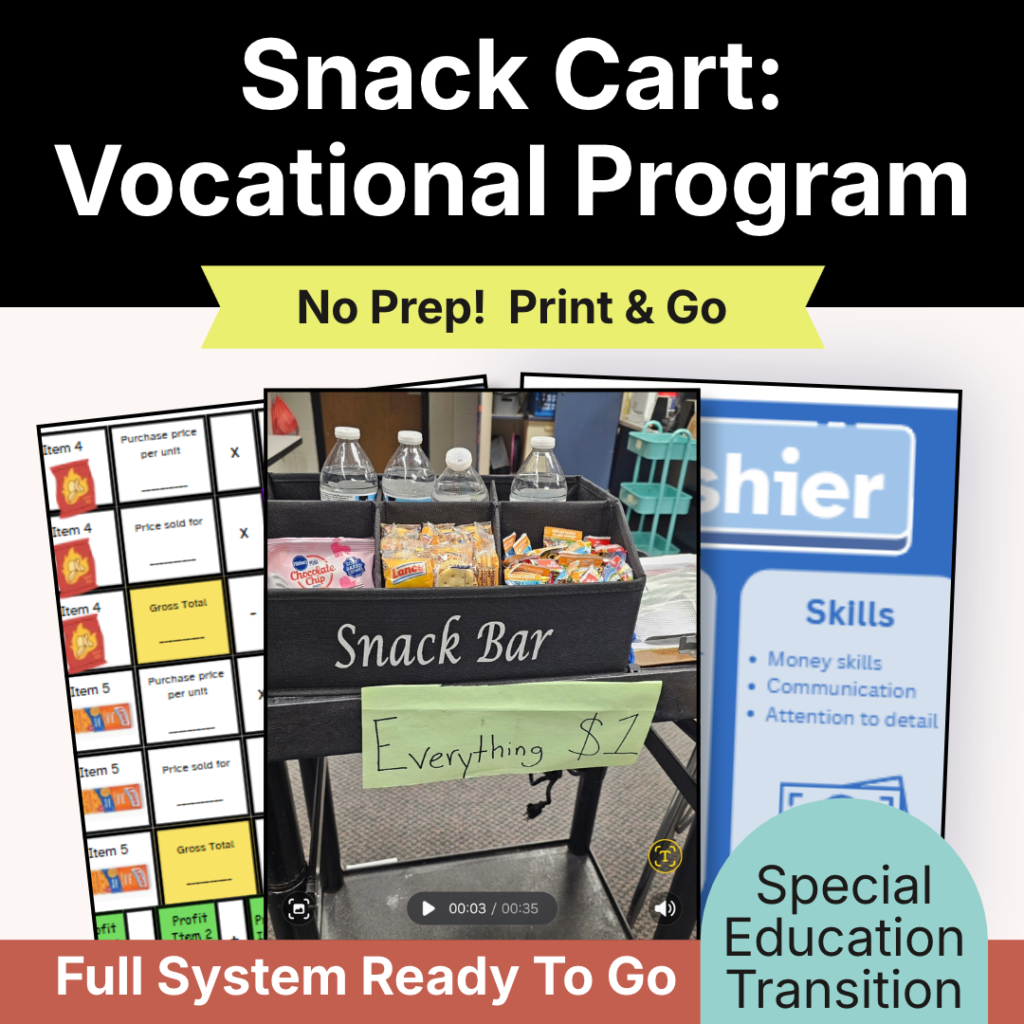
The snack cart runs during passing periods and lunch. Students are assigned job roles — inventory manager, sales associate, cash handler, or supervisor — and each role comes with a task card that keeps the routine predictable and clear.
The math is differentiated intentionally. One student might be working on coin identification. Another is calculating how much change to give. A third is tracking daily profit across the week. All three are participating in the same cart run at the same time, side by side.
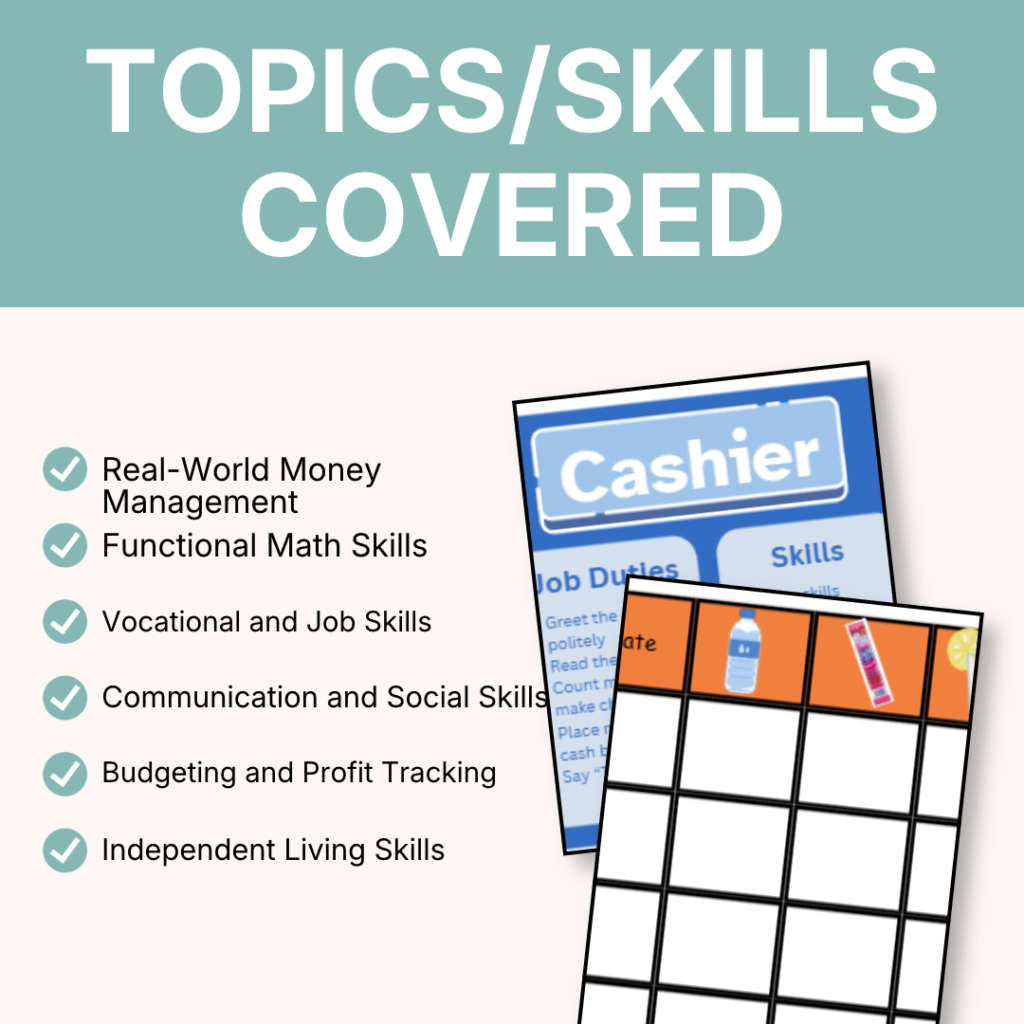
Token wages get earned each shift and spent at a classroom store we stocked with supplies and small rewards. That loop — work, earn, spend — has been one of the most motivating structures I have ever used.
The IEP and Transition Piece
One of the things I wanted most when I designed this was for the data to collect itself. I did not want to add a separate paperwork step after an already busy cart run. The IEP-aligned data collection forms are built to complete during the routine, so transition documentation happens as a natural part of the day rather than as an add-on.
If you are building a transition portfolio or working toward post-secondary employment goals, the snack cart program generates real evidence — not just a checklist someone filled out during a goal-review meeting.
What Happened That I Did Not Expect
I expected the math to improve. I expected students to get better at their job roles. I did not expect the hallway moments.
One of my students has a significant orthopedic impairment. Her job on the cart is to reach out and take the payment. That is it — and it is exactly the right size job for her. At the beginning of the year, peers had to learn to slow down and wait. By second semester, those same peers were coming back to her specifically. They learned her name. They asked how she was doing. That is a transition outcome no worksheet was ever going to produce.
Students who used to be passed by in the hallway are now known. That matters more to me than any data point I could collect.
How to Get Started
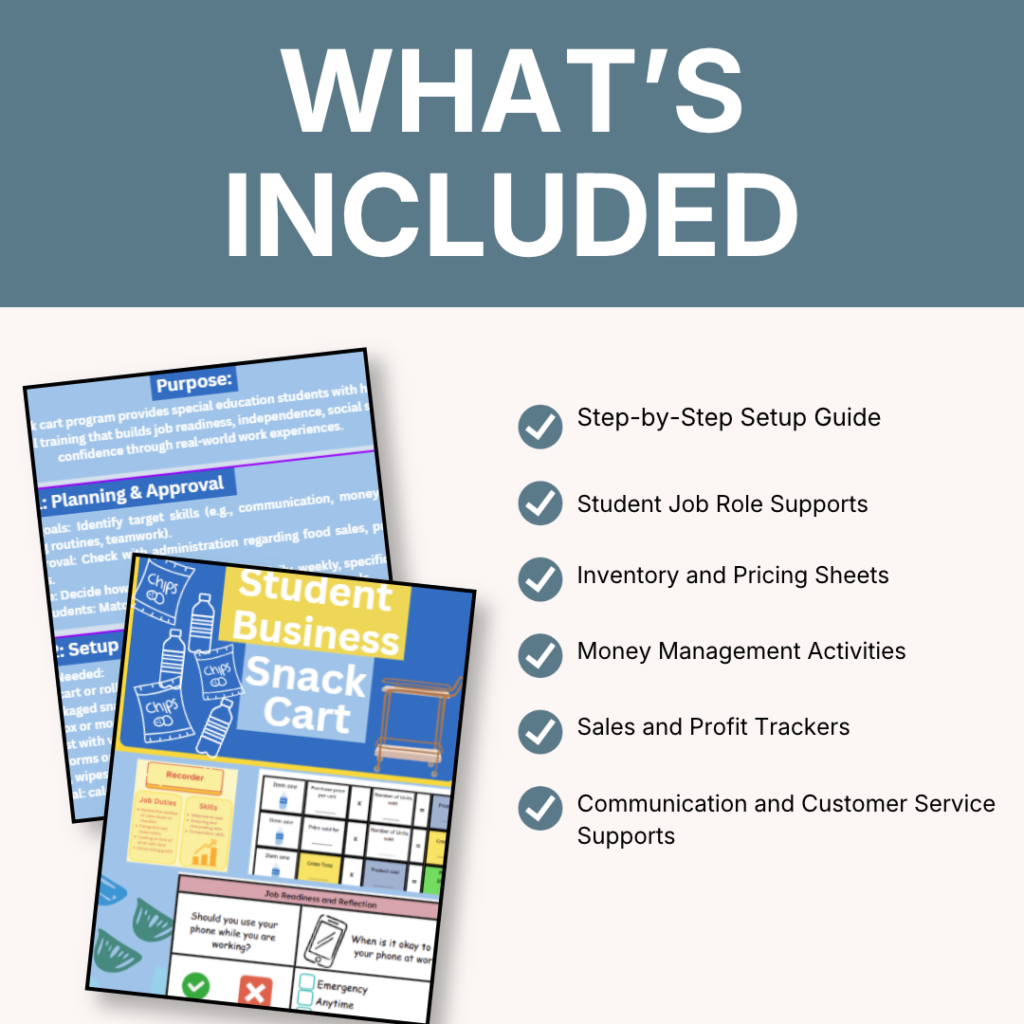
The program is designed to launch first semester and really find its rhythm by second semester. The launch guide walks you through setup so you are not starting from a blank page. Job role cards, differentiated math tasks, the token economy system, IEP data forms, and a classroom store spending menu are all included.
If you are a secondary sped teacher looking for a transition program that actually connects students to the world around them, this is built for you.
Grab the full snack cart vocational transition program here: https://teacherstore.io/product/snack-cart-program-real-world-life-skills-money-management-for-special-education-students/
You do not have to build it from scratch. I already did that part.